

13 Oct THE MYSTERIOUS CHARM OF HANIWA STATUES
by Renzo Freschi
I have always been fascinated by the most ancient forms of Asian cultures—for example, the Mother Goddesses of the Indus Valley, the Thai pottery of the Ban Chiang period, and the simple austerity of the earliest Chinese terracotta statues. A few years ago, I happened to come across a Japanese terracotta statue in Paris that struck me with its powerful simplicity. In the realm of Japanese art, I have focused on theatrical masks (on which I curated an exhibition titled “The Masks of the Soul” in 2015) and Buddhist sculpture.
That statue, so unusual to me, fascinated me; it transported me to an unknown world with its form that was so archaic yet also extremely modern. In this sense, it reminded me of certain ethereal female figures by a well-known Italian artist, Massimo Campigli. I therefore decided to purchase it, and upon studying it, I discovered that it dated back to the 5th century—almost to the very origins of Japanese art. It is a hollow terracotta statue generically called a Haniwa (literally, “Clay Circle”).
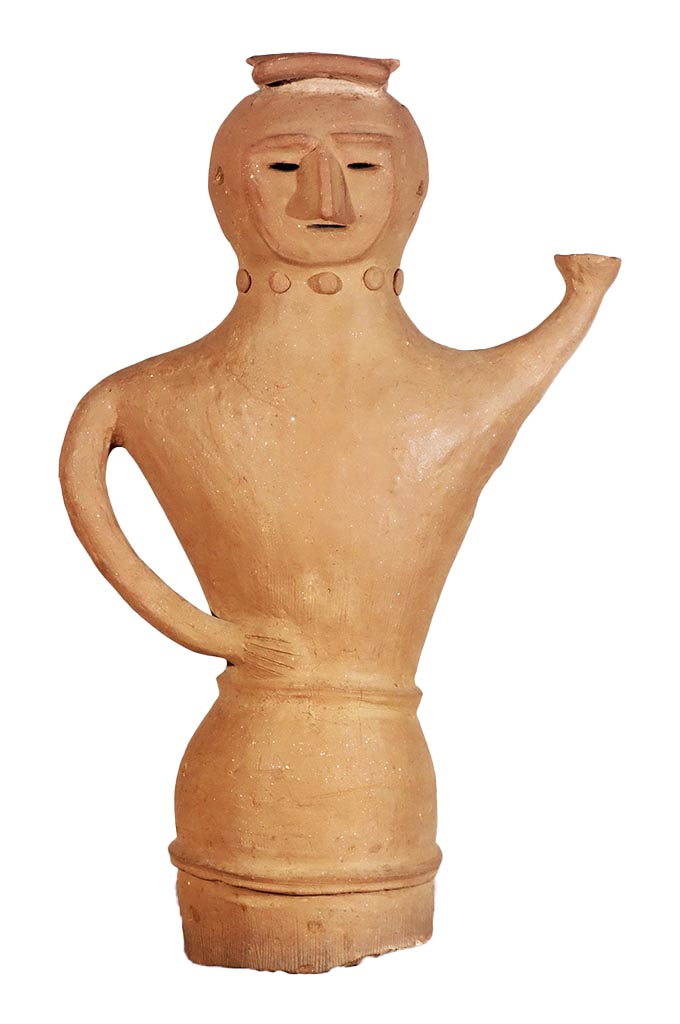
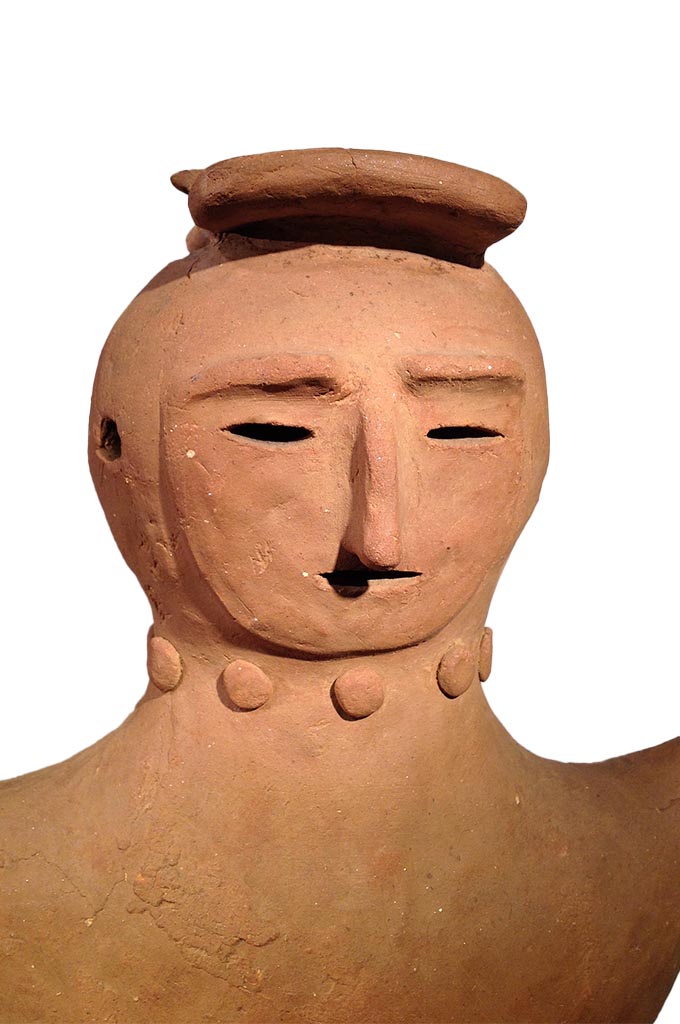
HANIWA, a female figure, possibly a shaman.
Japan, Kofun period (250–538)
5th–6th century
Terracotta, H 54 cm
Price on request
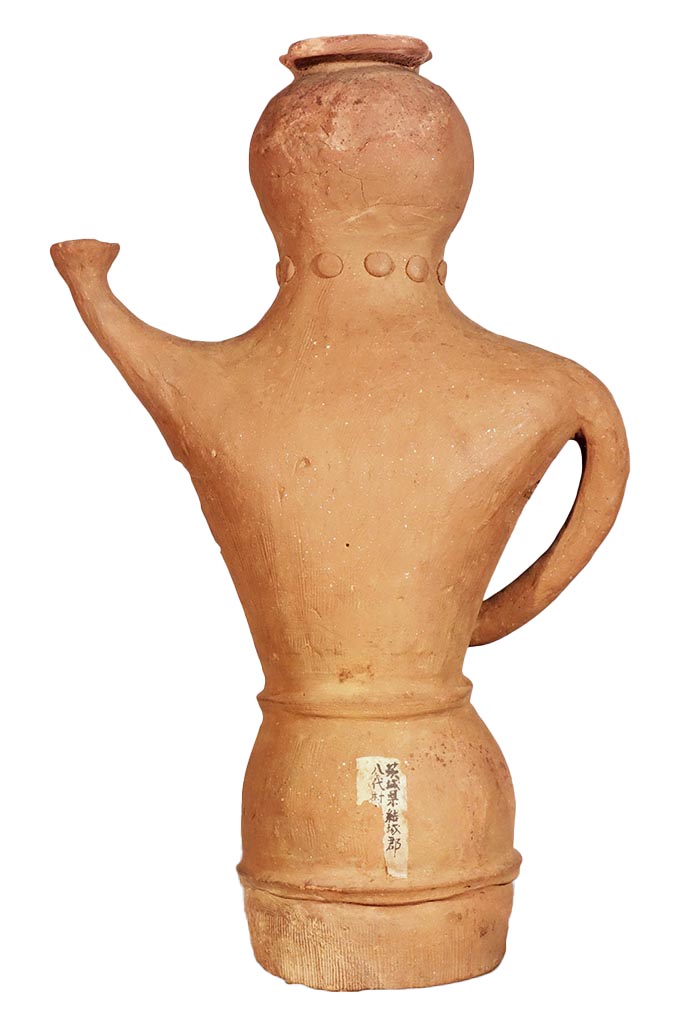
On the back is a label from an old Japanese collection indicating the place of origin: Ibaraki Prefecture, Yachiyo Village.
Courtesy of the Mingei Gallery, Paris
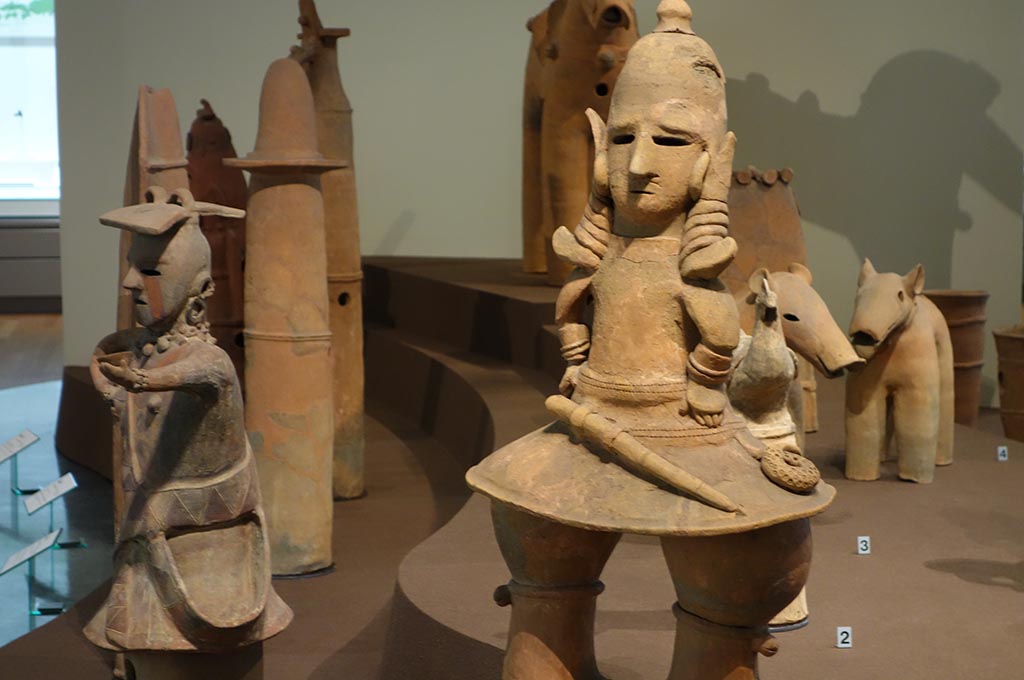
Haniwa statues were placed atop burial mounds where rulers and heroic warriors were buried; in this sense, they can be considered the Japanese equivalent of the Chinese Ming Qi (“Spirit Objects”) placed in the tombs of emperors and aristocrats. It is likely that both the Haniwa and the Ming Qi replaced the practice of sacrificing family members and officials, which had been carried out in the periods preceding the ruler’s death. Haniwa were initially simple clay cylinders that, around the 5th century, were replaced by human figures wearing the clothing and uniforms of the time. They have simple, unadorned forms, lacking realism except for an accurate reproduction of costumes and armor, as if their purpose were to emphasize the rank, valor, and social status of the deceased. Some have stylized arms raised as if in a dance step. The eyes and mouth are simple holes and slits that give the face an expression of enigmatic spirituality, so much so that scholars have hypothesized that some Haniwa represent shamans—intermediaries between the spirits of nature and humankind. This is a plausible hypothesis, given that Buddhism had not yet reached Japan in the 5th century and that its spread marked the end of this tradition.
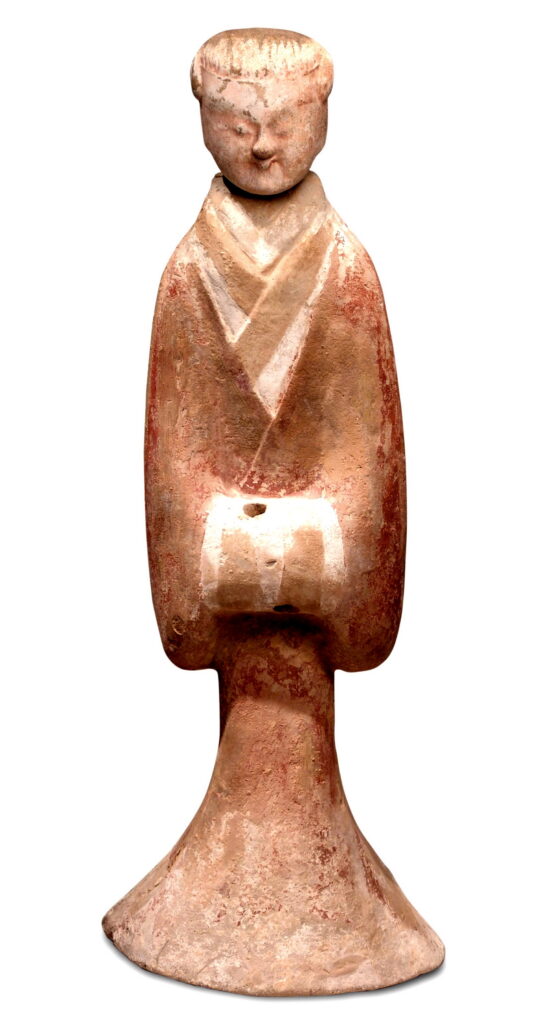
COURT LADY
China
Eastern Han Dynasty (25–220)
Polychrome terracotta
H. 66 cm.
Price on request
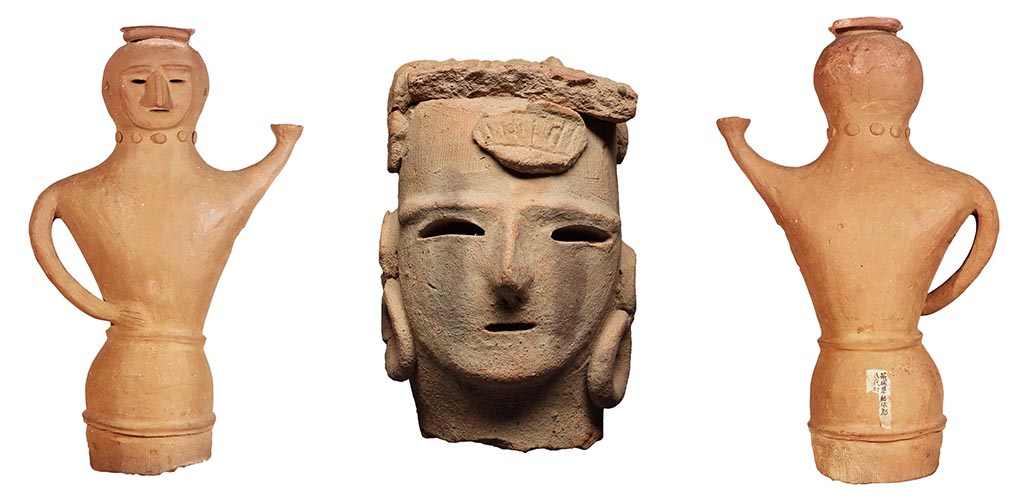
Haniwa statues are rare and hard to come by, so when, a few months ago, I was lucky enough to see this splendid male head at the home of a dear friend and colleague, I decided not to let the opportunity slip by and to pair it with the statue I’d had for some time. The face is modeled with simplicity; only the nose and the protruding eyebrows give it volume. The eyes are long slits with a still, deep gaze. A flat headdress rests on the head, held in place by a braided cord, and a wide, ornate diadem stands out on the forehead—a distinctive symbol of rank. This second purchase wasn’t just driven by my fascination with the mystery of this head; it also served as an excuse to delve deeper into an intriguing topic that, as I usually do, I’m pleased to share on my website.
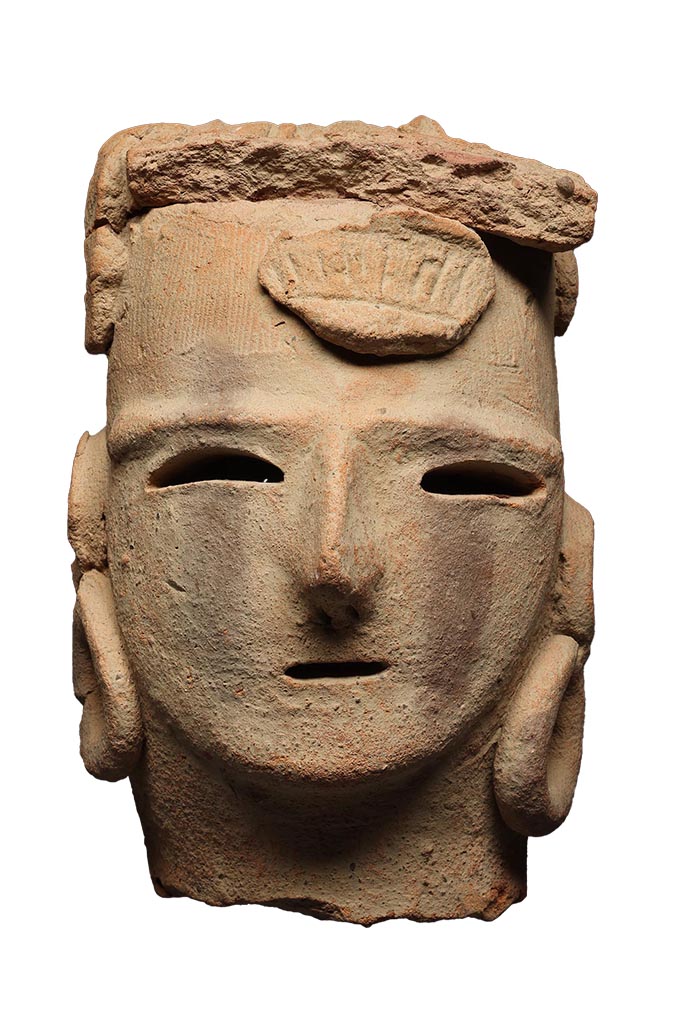
HANIWA, male head
Japan, Kofun period (250–538)
5th–6th century
Terracotta, H cm. 16
Thomas Murray Collection, USA
Price on request
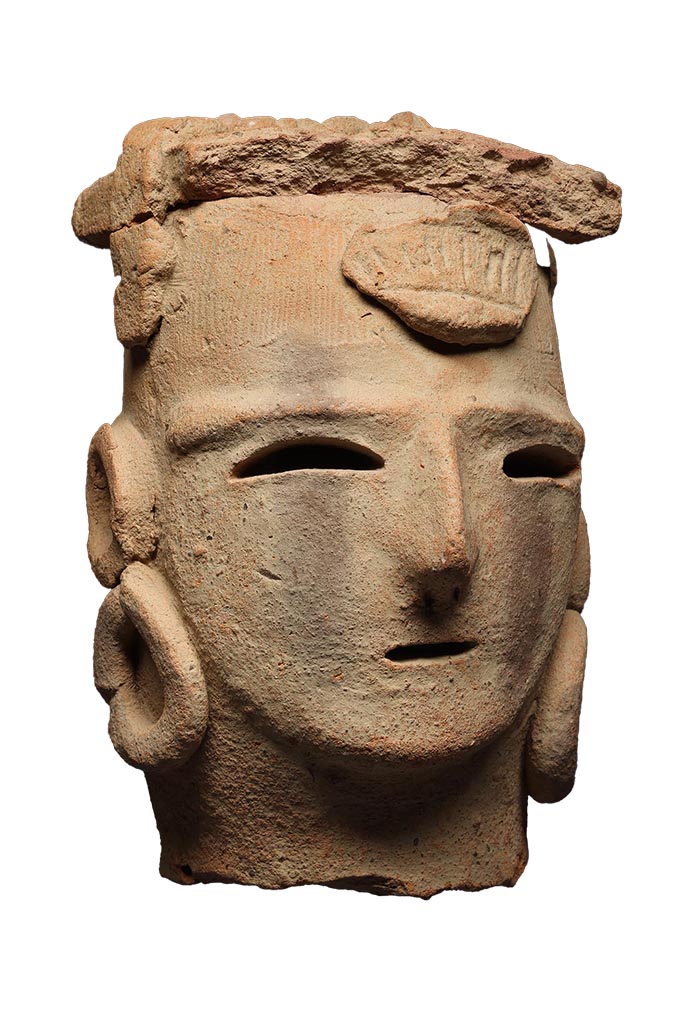
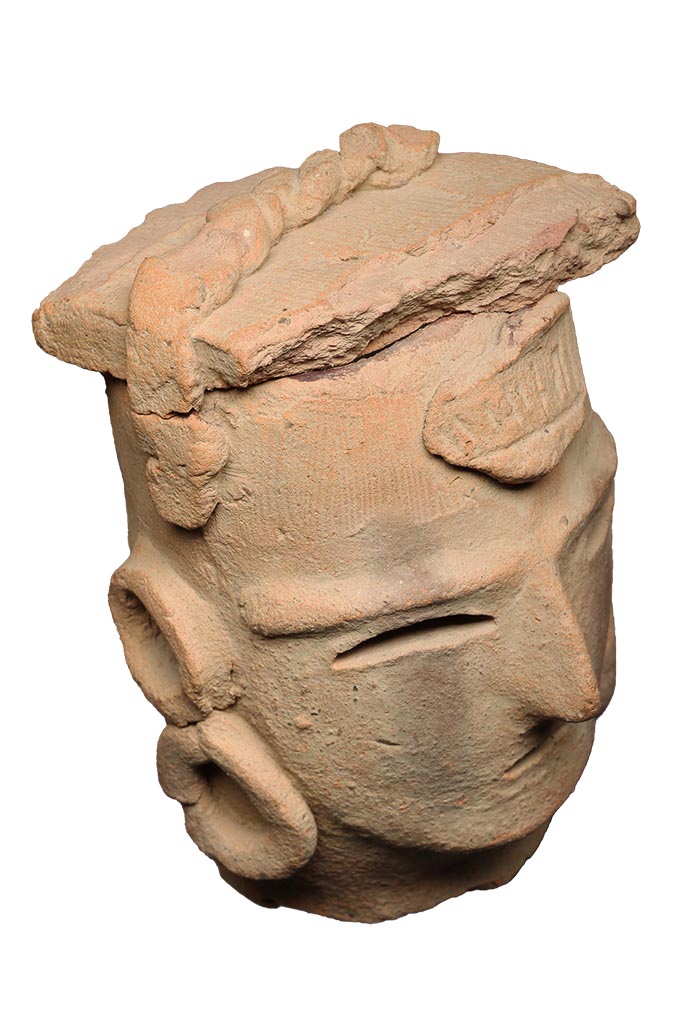
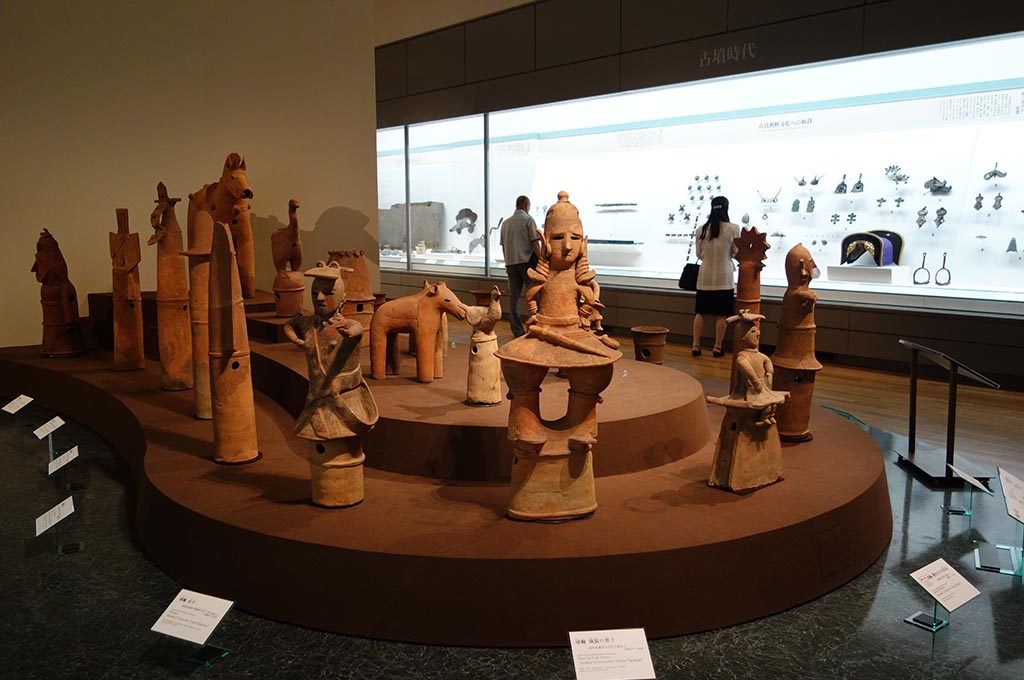
Tokyo National Museum

No Comments